On this page
DOD Affects Usable Energy
Two batteries with the same capacity can provide very different usable energy depending on their DOD and battery chemistry.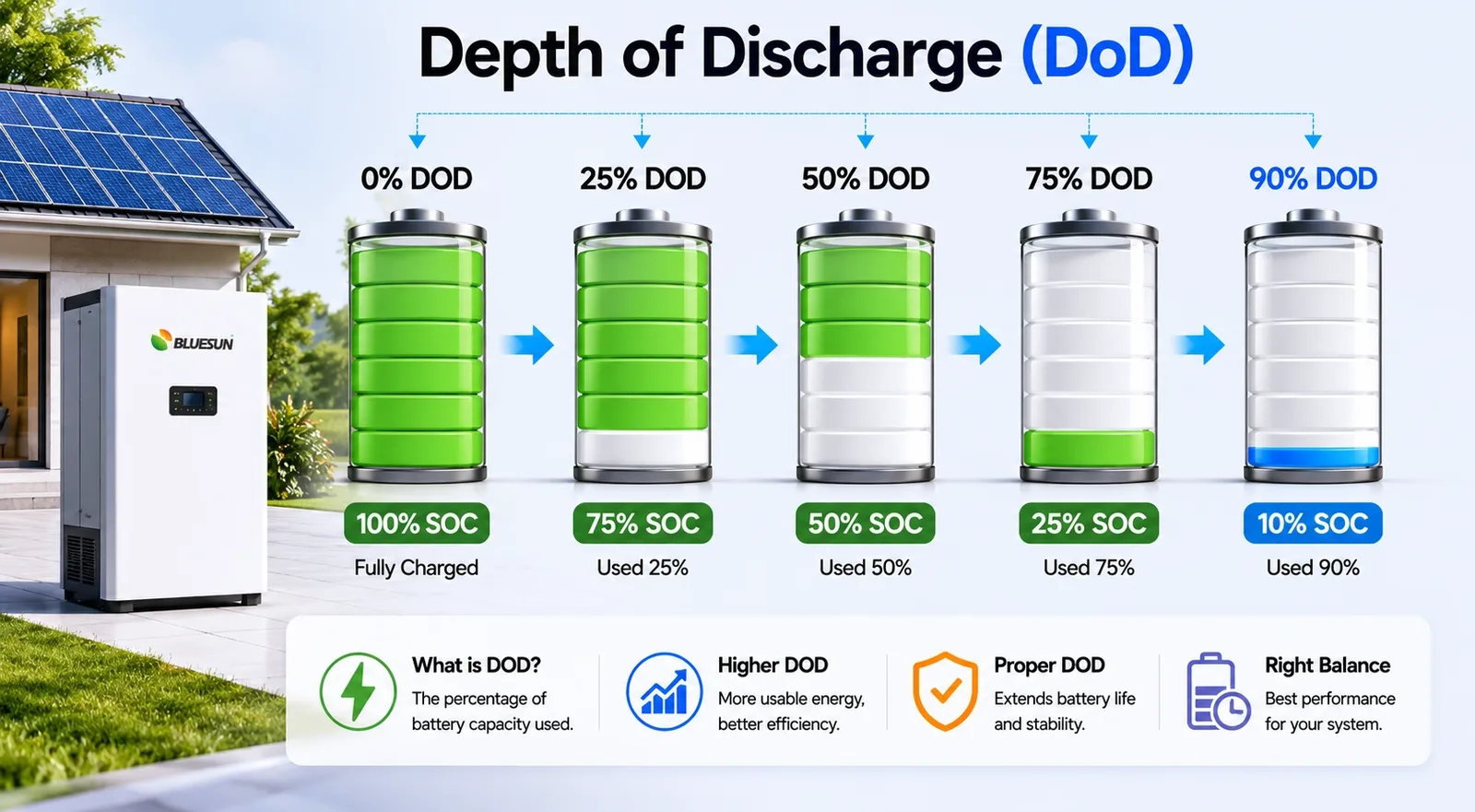
What Does DOD Actually Mean?
Depth of Discharge describes how much energy has been used from a battery. For example:- If a 10kWh battery uses 5kWh, the DOD is 50%
- If the same battery uses 9kWh, the DOD becomes 90%
Why DOD Matters in Solar Systems
Solar batteries usually charge and discharge frequently, especially in off-grid and backup applications. Because of this, usable capacity becomes more important than simply looking at the battery size on paper. For example, two 10kWh batteries may deliver very different real-world runtime depending on their recommended discharge level. This is one reason why DOD is closely connected to overall system efficiency and long-term battery performance.Why Lead-Acid Batteries Often Feel Smaller Than Expected
Traditional lead-acid batteries usually work best with relatively shallow discharge levels. If they are discharged too deeply on a regular basis, battery lifespan can decrease quickly. Because of this, many lead-acid systems only use a portion of their total rated capacity during normal operation. In real solar usage, this often means the battery provides less usable energy than users initially expected.Why LiFePO4 Batteries Are More Suitable for Daily Cycling
LiFePO4 batteries are widely used in modern solar storage systems because they support much deeper discharge levels while still maintaining long cycle life. Many LiFePO4 battery systems are designed to operate safely at 80% to 90% DOD during daily use. This allows users to access more usable energy from the same battery size. For solar systems that cycle every day, this can improve overall storage efficiency and reduce the need for oversized battery banks.Cycle Life and DOD Are Closely Connected
DOD also affects how long a battery can last over time. In general:- Lower DOD usually reduces battery stress
- Higher DOD increases usable energy
- Battery chemistry determines how well the battery handles deep cycling
| Battery Type | Typical DOD | Daily Cycling Performance |
|---|---|---|
| Lead-Acid | 30%–50% | More limited for deep daily cycling |
| NCM Lithium | 70%–80% | Better usable capacity |
| LiFePO4 | 80%–95% | Very suitable for solar storage |
Higher DOD Does Not Always Mean “Use 100%”
Some users assume that a battery with higher DOD should always be fully discharged. In reality, battery management is usually about balancing usable energy and long-term lifespan. Even with lithium batteries, stable charging conditions, temperature control, and proper system configuration still matter. Good system design is usually more important than simply pushing the battery to maximum discharge every day.A Simple Real-World Example
Imagine two batteries with the same 10kWh capacity.- A lead-acid battery operating at 50% DOD may only provide around 5kWh of practical usable energy
- A LiFePO4 battery operating at 90% DOD may provide around 9kWh of usable energy
What to Look at Besides Battery Capacity
When comparing solar batteries, capacity is only one part of the picture. It is also important to look at:- Recommended DOD
- Cycle life
- Battery chemistry
- Warranty terms
- System compatibility
- Temperature performance