On this page
Demand Charges Are Often Hidden in Plain Sight
Many businesses pay demand charges every month without fully understanding how they are calculated or how much they affect overall electricity costs.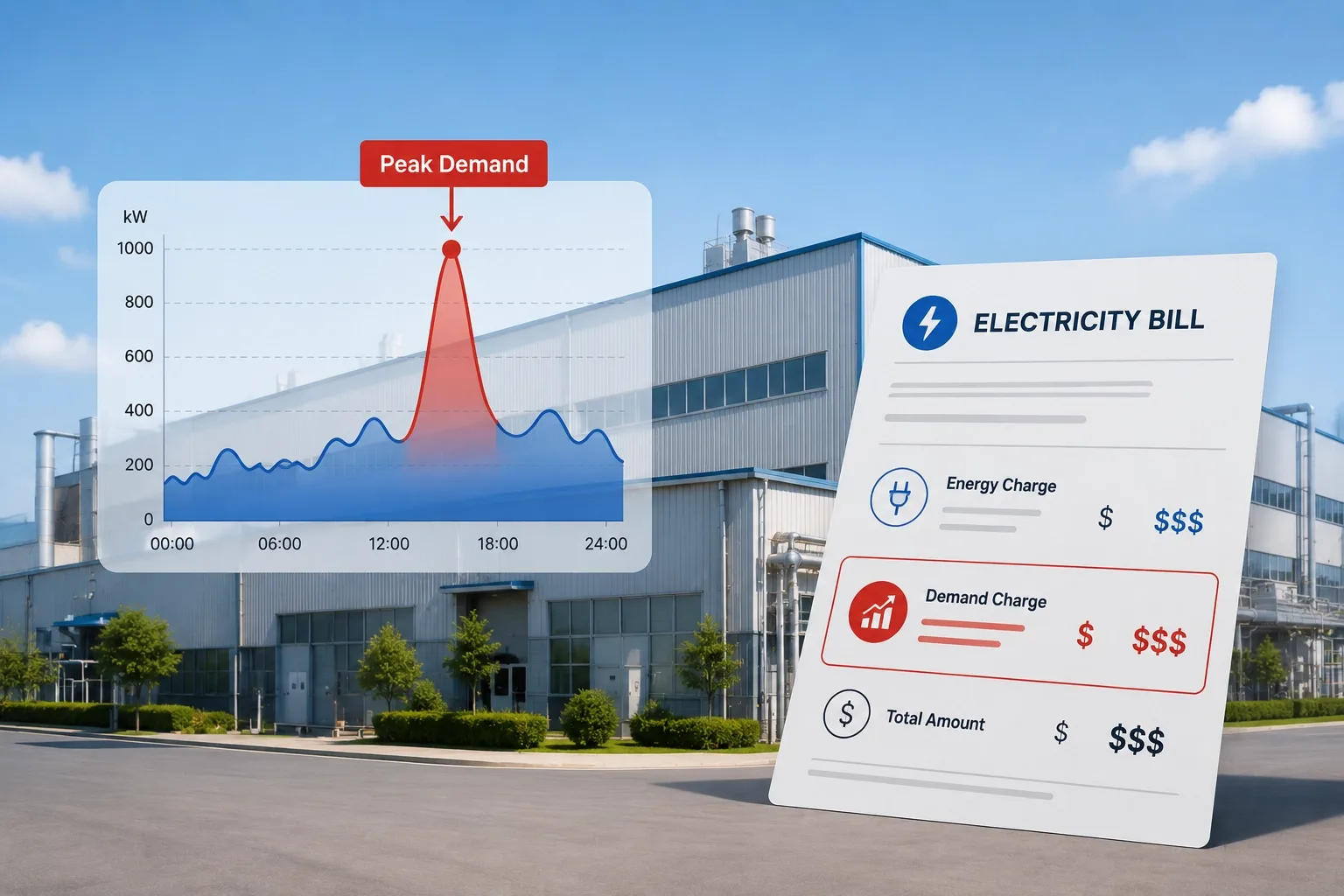
What Is a Demand Charge?
A demand charge is a fee based on the highest level of power a facility draws from the grid during a billing period. Unlike energy charges, which are calculated based on total electricity consumed, demand charges focus on peak power usage. For example, a factory may use a moderate amount of electricity throughout the month but briefly operate several large machines at the same time. If that short period creates a high power demand spike, the utility may use it to calculate demand charges for the entire billing cycle.Why Utilities Use Demand Charges
Electric utilities must build and maintain infrastructure capable of supporting peak demand. Even if a customer only reaches that peak level for a short time, the grid must still be able to supply it. Demand charges help utilities recover the cost of maintaining generation, transmission, and distribution capacity. For businesses, however, these charges can create significant electricity expenses.A Simple Example
Imagine two factories that consume the same amount of electricity each month. Factory A operates equipment evenly throughout the day. Factory B starts several large motors simultaneously every morning, creating a sharp demand spike. Although total energy consumption is identical, Factory B may pay significantly higher electricity bills because of higher peak demand. This is where energy storage can make a measurable difference.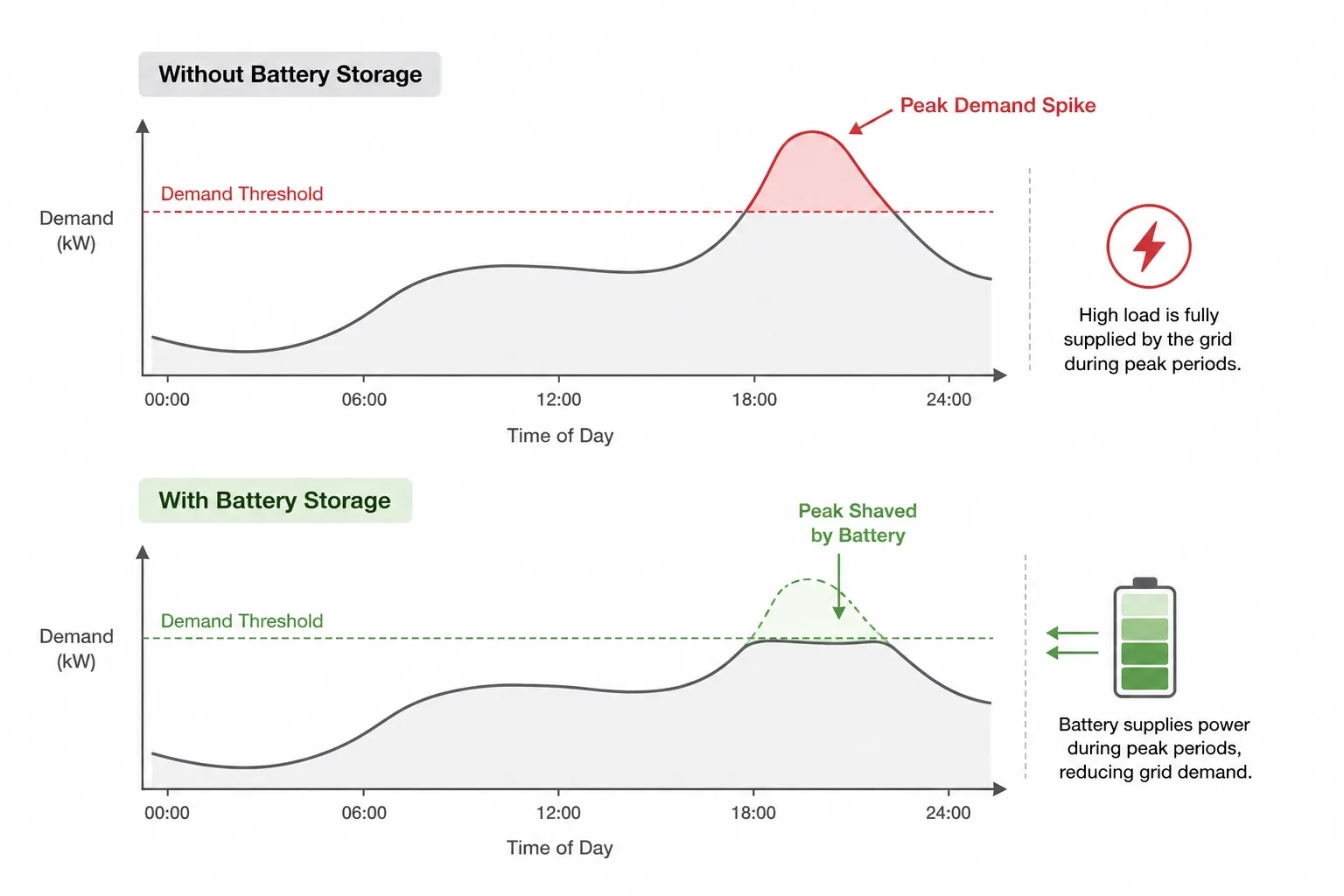
How ESS Helps Reduce Demand Charges
Battery energy storage systems can discharge during periods of high electricity demand. Instead of drawing all required power from the grid, part of the load is supplied by the battery. This lowers the facility's peak demand and reduces the demand charge used by the utility for billing. The process is commonly known as peak shaving. In many commercial projects, peak shaving represents one of the largest sources of energy storage savings.Peak Shaving Does Not Require Large Amounts of Energy
One common misconception is that a battery must run for many hours to generate value. In reality, some facilities only need battery support for short periods during peak demand events. A relatively short discharge window can sometimes produce substantial savings if it successfully lowers the billing demand level. This is why demand-charge reduction projects often achieve attractive returns on investment.Which Facilities Benefit Most?
Demand-charge reduction is particularly valuable for facilities with:- Large motors or industrial equipment
- Manufacturing operations
- Cold storage facilities
- Commercial buildings with high HVAC loads
- Logistics centers and warehouses
- Facilities with EV charging infrastructure